
How To Implement Connectivity Solutions During Construction
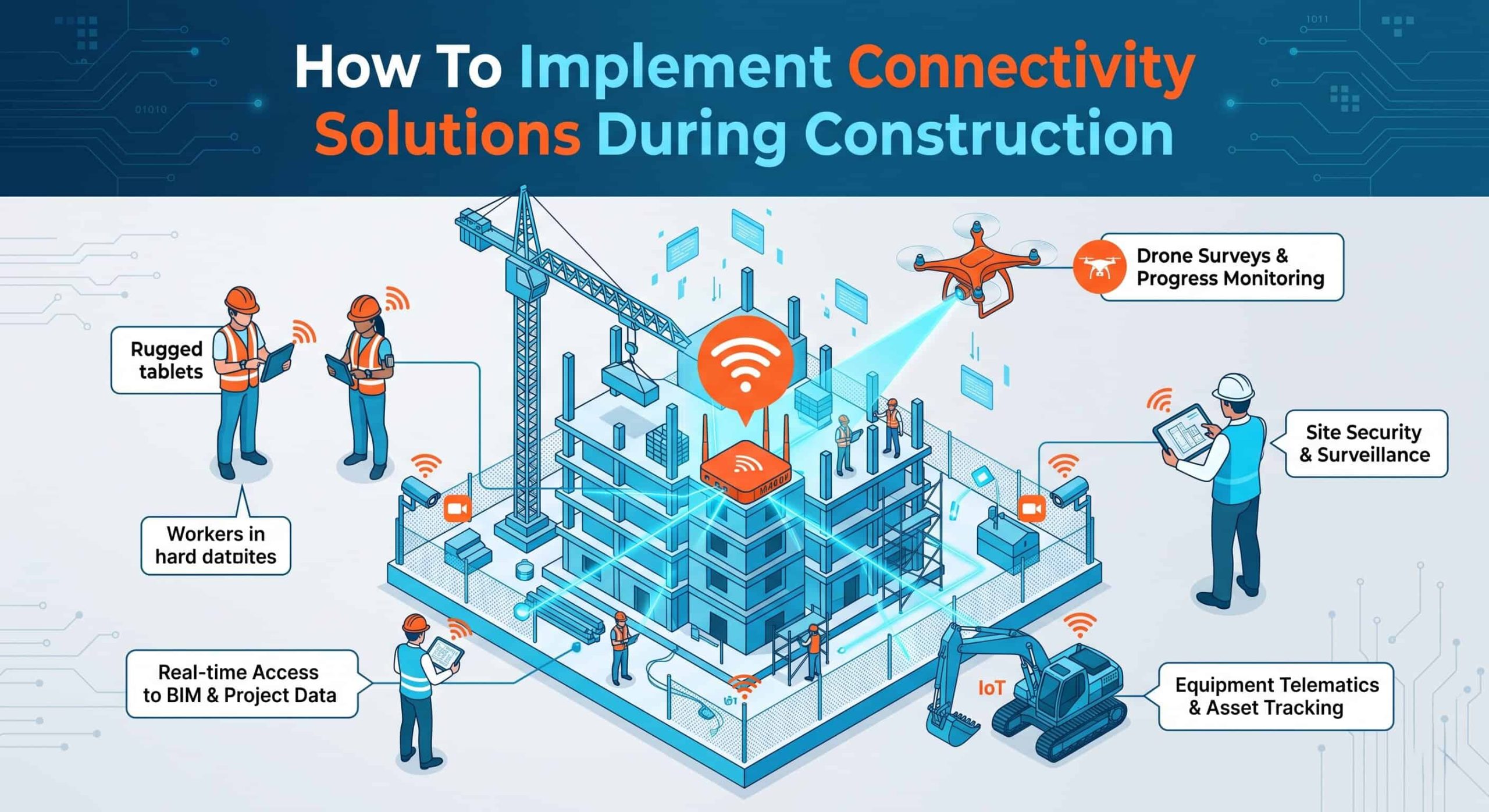
Mobile connectivity during the construction phase is more important than you may think. A good, stable signal is needed for things such as IoT devices, security cameras, laptops, and even high-demand apps like Building Information Modelling (BIM) that contractors and architects may use throughout the project.
Implementing connectivity solutions during construction doesn’t need to be complicated, but it does require planning and a strong understanding of the needs of the construction project, as well as the connectivity needs of the building once the project is completed.
Keep reading to find out how to implement connectivity solutions during construction, why it’s important for the construction phase, and why implementing during construction can be beneficial for the completed project.
Why Is Mobile Connectivity Poor On Construction Sites?
When on construction sites, sometimes the mobile signal is poor or almost non-existent. This can be due to several reasons:
- Remote and rural location: Some construction sites are located on empty land in places that are outside of urban centres, where mobile signal and signal towers are sparse.
- Signal interference and blockages: Many materials that are needed on a construction site cause blockages to the signal. Things like temporary cabins, scaffolding, and site offices can cause interference.
- Congestion: Depending on the size of the project, a construction site can have hundreds of devices that rely on connectivity. This can cause congestion and weaken the signal as it cannot keep up with the demand.
On top of these signal issues, there may also be infrastructure issues causing Wi-Fi issues too. If the site is on empty land, it’s likely that broadband infrastructure doesn’t already exist. In these cases, mobile connectivity is more important than ever.
How To Implement Connectivity Solutions During The Construction Phase
Implementing connectivity solutions during construction will require a thorough site assessment with a phased approach that leverages cellular and satellite technologies to ensure a strong, stable connection with high-speed internet access.
- A connectivity survey needs to be conducted to determine the available signal masts (4G/5G) and any potential infrastructure for Wi-Fi connectivity.
- Determine the number of users and devices that will need internet access.
- Map out where Wi-Fi access points can be implemented for optimal connectivity during the project and after (if applicable).
- It’s advised to work with specialists once you have collected the information needed. They will handle any complex setups and ensure a speedy deployment.
If Wi-Fi connectivity is not possible or not needed, and mobile connectivity is your main focus, you may find that the best solution is to implement mobile signal boosters. With a signal booster, you can improve your mobile connectivity strength without having to rely on a Wi-Fi network. Plus, you’ll be able to use your devices on the go rather than having to be in one centralised location, making it easier to complete projects without downtime.
NetCov supplies high-performance Ofcom-approved signal boosting systems, and is one of the UK’s leading designers and installers. Our mission is to provide businesses with signal-boosting equipment to boost workplace communications, productivity, and profitability.
Why Is Internet Connectivity Important During The Construction Phase?
From the outside, internet connectivity during the construction phase might not seem important, when in reality it is. Although most of the work on a construction site is manual, some parts require and benefit from a strong internet connection. A lot of construction projects are moving towards digital transformation, using and relying on things such as BIM and IoT sensors.
Connectivity during the construction phase can:
- Improve communication on the project. With instant access to project plans, BIM, and seamless communication between everyone involved, this keeps everyone aligned in real time and reduces downtime, errors, and costly reworks.
- Enhance on-site safety. Connectivity enables remote monitoring and surveillance, improving staff safety. Plus, wearable devices such as trackers or lone working systems can alert managers to accidents and hazardous conditions.
- Increase the efficiency of project management. With things like resource tracking and sensors that monitor quality control, you can manage inventory and on-site conditions to ensure you remain compliant with regulations.
- Adopt advanced technologies. Connectivity opens up access to IoT and smart machinery, as well as BIM. To use these, they will need high-speed, low-latency connectivity like 5G.
Why Implementing Internet Connectivity During The Construction Phase Can Benefit The Finished Project.
Sometimes, implementing connectivity during the construction phase is not about supplying the construction site with strong internet access, but more about focusing on the finished project. For example, say the project is to build a retail centre; implementing connectivity during the construction phase will ensure that once the project is completed, the internet connection is already there and ready to use, eliminating the need for extra time spent getting the building connected.
With a dedicated network specialist like NetCov, you can ensure your completed project will be connected in time for the grand opening. We can implement high-quality, Ofcom-approved signal boosters during the construction phase so that everything is ready to go when the project is finished.
High-Performance Signal-Boosting Equipment By NetCov
NetCov is a UK leader in designing and installing high-performance, Ofcom-approved signal boosting systems to help businesses stay connected. We work with industry-leading networks such as O2, Three, EE, and more.
Our signal boosters work by sourcing and amplifying your chosen network’s signal through internal antennas around the building. These antennas can be implemented during the construction phase, so that you don’t need to worry about connectivity downtime once the project is completed.
Contact us for more information on how we can help your project, or book a free quote today.