
How Can Cellular Applications Improve Education in Schools?
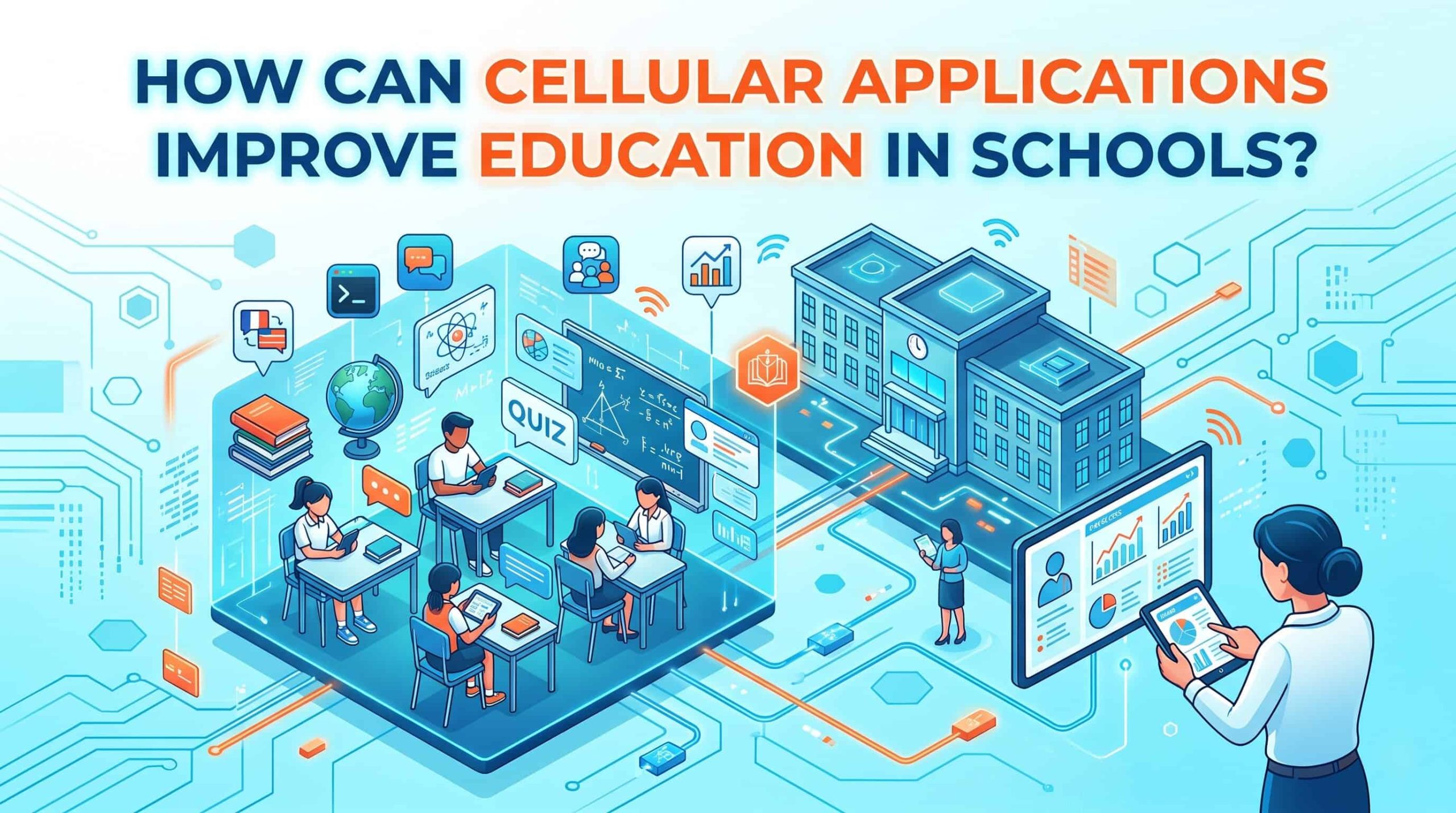
When people think of cellular applications being used in school, the first thought might be that it can be detrimental to education. However, with so many new cellular applications supporting schools and education by offering different styles of learning, when implemented correctly, the impact can be positive. Things such as:
- Applications for personalised learning
- Interactive content
- Instant access to education resources
- And enhanced communication
Are all ways in which cellular applications can improve education in schools.
Keep reading to find out more about how cellular applications can improve education in schools and how you can implement it into your educational building.
What Are Cellular Applications?
Cellular applications, also known as mobile apps, are software designed for smartphones, tablets, and IoT devices, using cellular networks such as 4G or 5G, or WiFi. Common examples of cellular applications would be social networking, banking, streaming services, or GPS navigation. However, when cellular applications are implemented in schools, they serve a different purpose than well-known consumer apps.
Cellular applications in schools are built with the purpose of enhancing learning and offering different ways of learning for students, but also to aid communication and administration between staff, students, and parents.
Think of applications such as Duolingo (for learning new languages), Google Drive (to allow students to collaborate on projects), and Learning Management Systems – LMS (for teachers to manage, track, and deliver educational content with ease).
The Benefits of Cellular Applications in Schools
When it comes to the education system, there are many ways in which cellular applications can be beneficial, not only to students, but to teachers and parents, too.
Enhanced and Personalised Learning Experience
Every student has a different and preferred way of learning. While one might find it useful to listen and take notes, another might find it useful to perform the task to understand how it works. With cellular applications, you can give students the freedom to personalise their learning experiences, sometimes even incorporating gamification, making subjects seem more enticing.
Improved Communication
One of the most important parts of education is successful communication between all parties: teachers, students, and parents. An app can provide a quick and easy way to communicate updates, news, homework, and allow access to student records.
Access to Information
Not every student will have the same access to information. However, with cellular applications, this can close that gap. It can aid in self-learning by allowing them to access the tools, topics, educational videos, and other resources that may be useful to their education.
Student Collaboration
Collaborative apps are a great way to get students to work together on projects, sometimes even from the comfort of their own homes. This can allow the quieter students to work comfortably on collaborative projects and encourage different social groups to work together.
Cost Effective
From an administrative point of view, cellular applications can be a cost-effective way of replacing newsletters, school updates, and notices. They can also help simplify managing school administration and any events that are in the calendar, by keeping everything documented and organised in one neat app.
How To Implement Cellular Applications in Schools
Although implementing cellular applications in educational buildings will be a case of deciding which applications you want to use, and possibly having an app created for your school, you will also need to make sure that your students can access the software while in the school building. To do this, you will require a strong connection to a cellular network.
To ensure everyone has access to the applications you chose without having to sign into WiFi networks, and without risking an insecure connection, cellular connectivity is essential. You’ll see less interference and network issues, and will come across fewer interruptions in signal. However, not every building will have a strong capability of connecting to a stable network. That’s where mobile signal boosters come in.
Where To Get A Mobile Signal Booster?
There are factors which can stand in the way of your school building having a strong mobile signal, such as remote locations, thick walls made from dense materials, and network congestion in crowded areas. However, with a mobile signal booster, you can combat these issues.
With an Ofcom-certified signal booster, like the ones supplied by NetCov, you’ll be able to amplify the signal across the whole school building, including places known as signal ‘dead zones’. This means that every inch of the building will be able to connect online without the fear of dropping the connection. You also won’t need to worry about network congestion, either, which can slow down your speed, as a signal booster will combat this.
Mobile Signal Boosters For Education Buildings
NetCov is a leading expert when it comes to mobile signal boosters. We have over 35 years of experience in mobile connectivity and work with all the UK’s leading network providers, such as O2, EE, Vodafone, and Three. We have implemented Ofcom-approved signal boosters in many educational buildings, from schools to universities.
Contact us today to find out how we can help you achieve your cellular application goals in your school.